

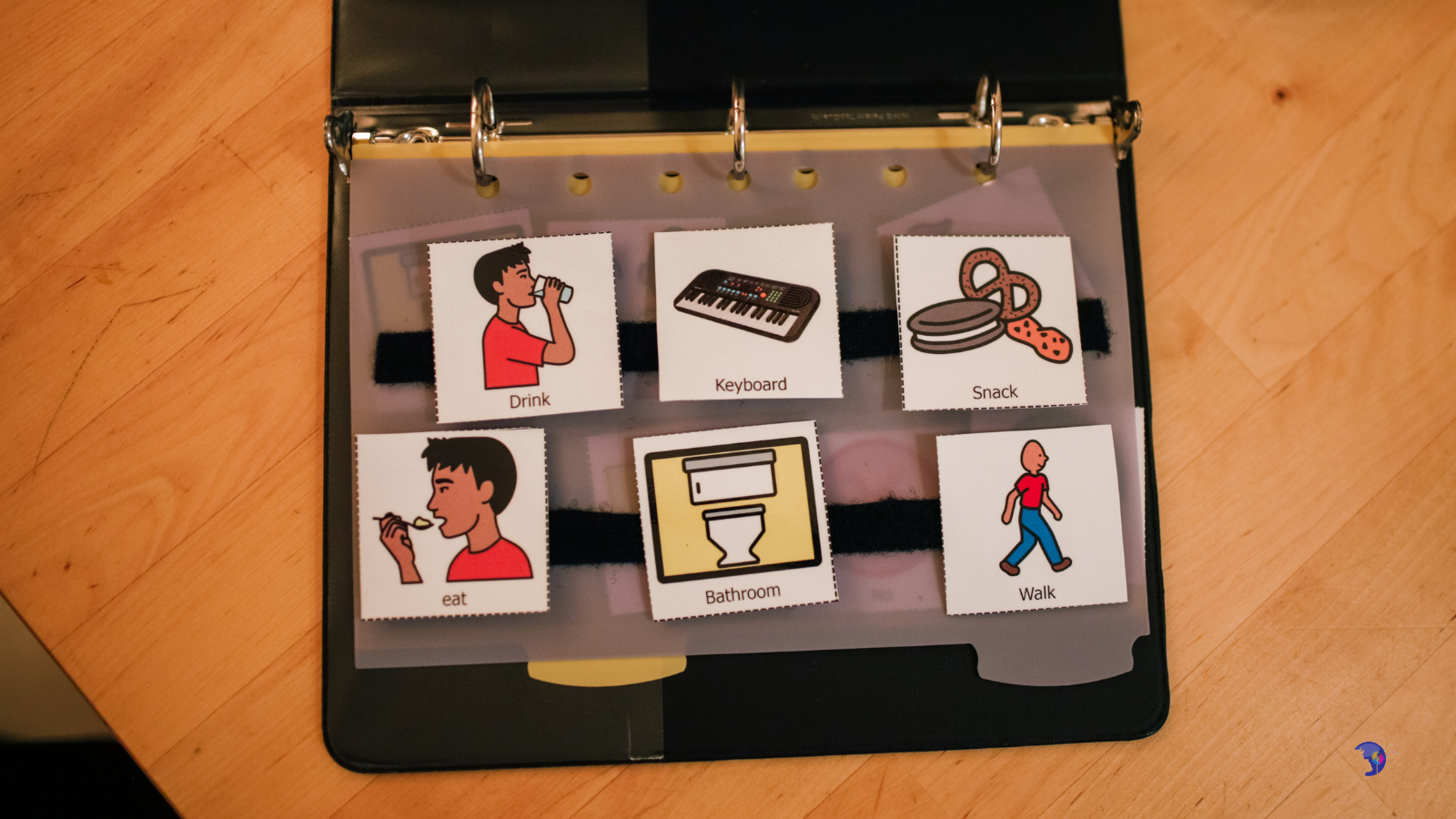
If you’ve been told your child may benefit from AAC, you might be wondering what that means and whether it will help or hinder their ability to verbally communicate. AAC stands for Augmentative and Alternative Communication, and it refers to any method of communication used to supplement or replace spoken language. AAC can include a wide range of tools, from simple picture boards and gestures to more advanced speech-generating devices or communication apps. The goal of AAC is not to replace speech, but to give children a reliable way to express their wants, needs, thoughts, and ideas, especially when verbal communication is difficult.
Many children who benefit from AAC have difficulty using spoken language consistently or effectively. This can include children with autism, speech sound disorders, childhood apraxia of speech, developmental delays, or other communication challenges. When a child cannot easily express themselves, it can lead to frustration, behavioral challenges, and reduced opportunities for social interaction. AAC provides a way to bridge that gap by giving them an immediate and functional means of communication.
One of the most common misconceptions about AAC is that it will prevent a child from talking or make them “rely” on a device instead of using their voice. Research and clinical experience consistently show the opposite. Research has demonstrated that AAC often supports and increases verbal language development rather than replacing it. When children are given a way to communicate successfully, they begin to understand the power of communication. This increased success can reduce frustration, increase confidence, and create more opportunities for interaction, all of which are critical for developing spoken language.
AAC also helps build a strong foundation for expressive language by supporting vocabulary development, sentence structure, and social communication skills. When a child uses AAC, they are exposed to consistent language models. For example, when a communication partner models words or phrases on a device while speaking, the child is able to both hear and see the language being used. This multimodal input can make language more accessible and easier to learn. Over time, children may begin to imitate these models, using AAC alongside verbal attempts or gradually increasing their spoken output.
Another important benefit of AAC is that it allows children to participate more fully in their daily environments. Instead of being limited by what they can say verbally, they can actively engage in conversations, make choices, ask questions, and share experiences. This increased participation naturally creates more opportunities to practice communication, which is essential for both expressive language growth and verbal development.
It is also important to understand that AAC is highly individualized. A speech-language pathologist will assess your child’s strengths, needs, and current communication abilities to determine the most appropriate system. For some children, this may be a low-tech option like pictures or visual supports, while for others it may involve a high-tech speech-generating device. Regardless of the system, the focus is always on making communication as functional, efficient, and meaningful as possible.
AAC does not take away a child’s voice, it gives them one. By reducing communication barriers and providing consistent language support, AAC can play a powerful role in helping children develop expressive language skills and, in many cases, increasing their verbal output. If you are considering AAC for your child or have questions about whether it is appropriate, one of our speech-language pathologists can guide you through the process and help you find the best fit for your child’s unique communication journey.
