

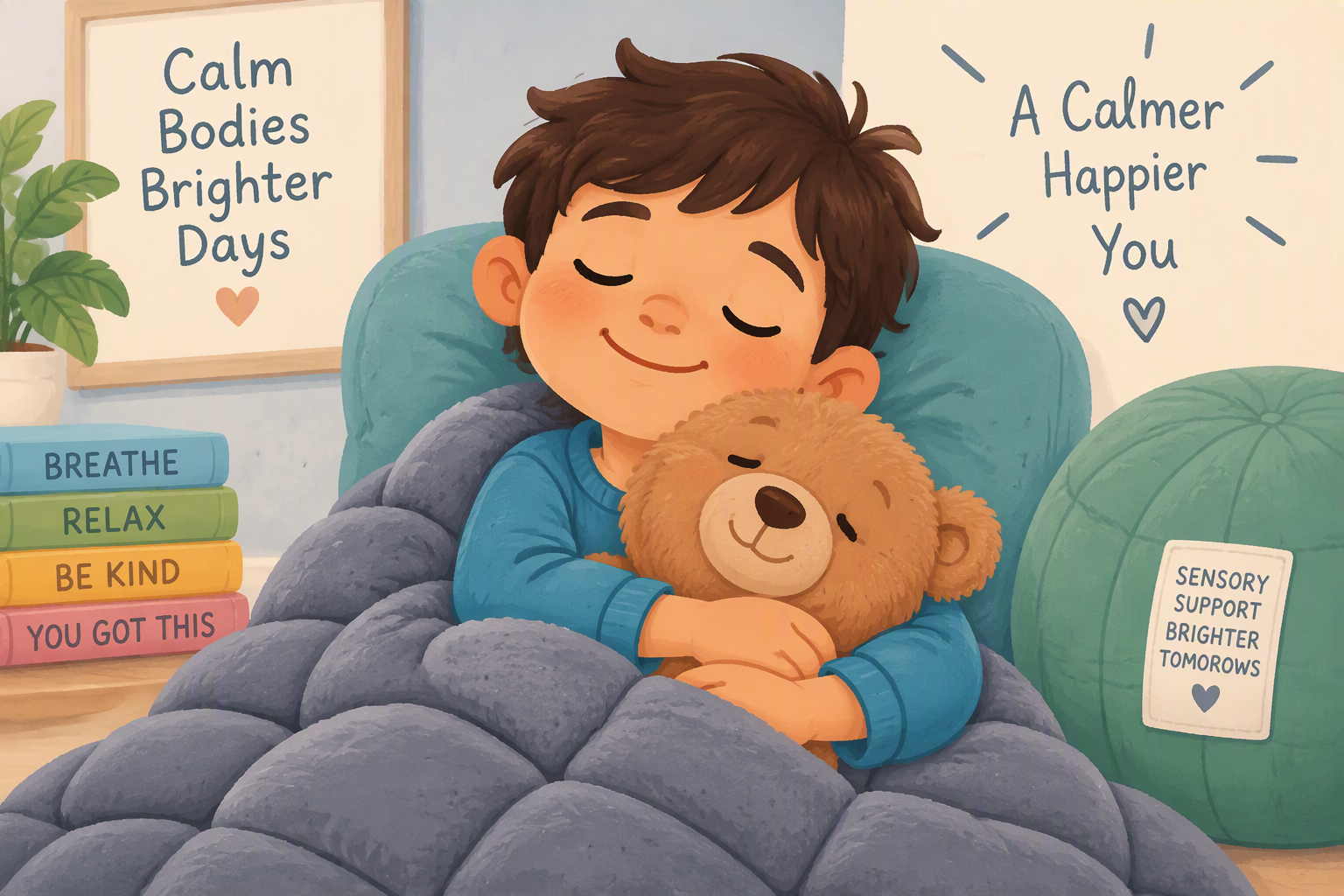
Deep pressure is firm, gentle, evenly applied pressure delivered to the body through various methods.
It can be applied to the arms, legs, torso, or entire body, depending on the individual’s sensory needs. Deep pressure is often provided through gentle, firm squeezes to the arms and legs, joint compressions, pressure vests (weighted or unweighted), weighted blankets, or hugs.
It is important to note that weighted vests and blankets should generally weigh between 5% and 10% of your child’s body weight and should typically be used for no more than one hour at a time.
Deep pressure can be regulating for a number of reasons. Listed below are some of the many benefits deep pressure may provide for your child:
Calms the Nervous System
Deep pressure lowers activity in the sympathetic nervous system, the system responsible for the body’s fight-or-flight response.
Increases Body Awareness
Deep pressure activates the proprioceptive system, which includes the receptors in the muscles and joints that provide information about body position and movement. This helps the brain better understand where the body is in space.
Promotes a Restful State
Deep pressure increases activity in the parasympathetic nervous system, which helps the body recognize that it is safe and can relax.
Helps Reduce Sensory Overload
Deep pressure is the opposite of light touch, such as tickling, which can sometimes overwhelm the sensory system. It helps the brain filter out distracting or overwhelming sensations.
Lowers Stress Hormones
Deep pressure can reduce cortisol production, the hormone released when a person is feeling stressed or anxious.
May Improve Coordination
Because deep pressure increases body awareness, it can help a person better understand where their body is in space, leading to more precise and coordinated movements.
Increases Feel-Good Chemicals
Deep pressure may increase levels of dopamine and serotonin, which can support better sleep and promote an overall sense of calm.
